Cultural Tourism and More!
Cultural Tourism and More!
Last weekend we had several cultural events in our little town. On Friday, we held our annual Light the
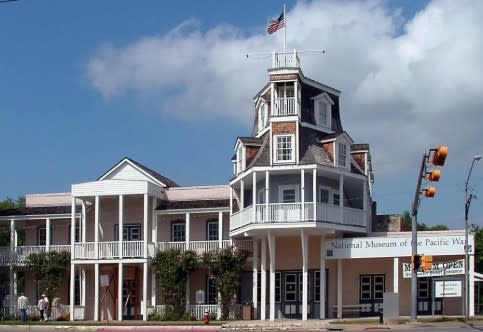
Night Christmas parade and Saturday was the reopening of the newly renovated George H W Bush
Gallery of the National Museum of the Pacific War. A ceremony on Sunday commemorated the Attack
on Pearl Harbor in 1941. The number of cultural events we have throughout the year in our small town
is amazing to me.
Since the beginning of the current decade, cultural tourism has become a dominant growth sector in the
travel industry. Market analysis for 2024—2025 projects this sector to grow more than 6% annually.
According to the U.S. Travel Association, cultural travelers stay longer and spend significantly more per
trip than the average leisure tourist. For Fredericksburg, the raw materials for this sector are already in
place, waiting to be fully leveraged. We possess a unique "quadrant of history" that few American small
towns can match: The Pioneer Museum, Fort Martin Scott, the National Museum of the Pacific War, and
the historic Comanche Treaty.
The Anchor: A World-Class Draw
The National Museum of the Pacific War is not just a local museum; it is a Smithsonian-grade
institution.
From a business perspective, this museum provides the "anchor tenant" effect. It draws national and
international traffic who book multi-night stays. The opportunity for local businesses lies in creating
"satellite" experiences. Restaurants, hotels, and tour operators can curate packages specifically for
enthusiasts of military history as well as American history, ensuring that the dollars spent at the
museum spill over into the rest of Main Street.
The Frontier Economy: Fort Martin Scott and the Treaty
While the Pacific War draws a global and national crowd, Fort Martin Scott and the Comanche Treaty
offer a narrative that is uniquely, fiercely Texan.
As the first U.S. Army outpost on the Texas frontier, Fort Martin Scott represents the gritty reality of
expansion. But the true differentiator is the Comanche Treaty of 1847. This remains the only lasting
peace treaty between Native Americans and the U.S. government (specifically the German settlers).
This is a potentially under-utilized branding opportunity. In an era where cultural tourism and
indigenous history are seeing a resurgence in interest, Fredericksburg can position itself as a place of
diplomacy and unique co-existence. There is room here for specialized guided tours, educational
summits, and heritage festivals that go beyond the standard "Wild West" reenactments to tell a more
complex, lucrative story.
The German Foundation: The Pioneer Museum
The Pioneer Museum grounds the experience. It explains why the town looks the way it does.
For the cultural tourist, authenticity is the currency. The Pioneer Museum validates the "German-ness"
of the town, moving it beyond kitsch and into genuine cultural preservation. For real estate developers
and business owners, this underscores the value of preservation. Maintaining the architectural integrity
of our historic district isn't just about aesthetics; it is an economic imperative.
Chambers of Commerce and Convention and Visitors Bureaus play distinctly different roles in the
economic health of a community, but in a tourism-heavy economy like ours, collaboration is key to
success. We look forward to working with the new Convention and Visitors Bureau president to leverage
our impressive cultural assets to take advantage of the growing cultural tourism sector.